

Conviction can feel overwhelming, especially when you believe the outcome was unjust. Understanding how to navigate the appeals process is necessary for you to seek justice and potentially overturn your criminal conviction. This guide will provide you with a step-by-step approach to help you effectively navigate the complexities of the appeals system, ensuring you know your rights and options. With the right knowledge and preparation, you can take proactive steps toward securing a fair outcome.
Understanding the Appeals Process
For individuals facing a criminal conviction, navigating the appeals process can be daunting yet vital. The appeals process provides an opportunity to challenge the court’s decision and seek justice. Understanding how this process works is crucial for effectively pursuing your rights and maximizing your chances of overturning a conviction or obtaining a reduced sentence.
What is an Appeal?
One of the legal mechanisms available to contest a criminal conviction is an appeal. This action allows you to request a higher court to review the decision made in your case, focusing on legal errors that may have affected the outcome. Importantly, an appeal is not a retrial; instead, it examines whether proper procedures were followed during your original trial.
Key Reasons for Filing an Appeal
While each case is unique, there are common reasons you might consider filing an appeal. These can include ineffective assistance of counsel, prosecutorial misconduct, improper admission or exclusion of evidence, and juror misconduct. Recognizing these elements can help you build a strong argument for why the original verdict should be reconsidered.
Process factors like inadequate representation during your trial can significantly impact the validity of your conviction. If your attorney failed to present critical evidence or adequately defend your case, you may have grounds for an appeal. Furthermore, if new evidence emerges after your trial that could change your case’s outcome, this can also justify filing an appeal. By understanding these key reasons, you position yourself better to navigate the appeals landscape effectively.
How to Prepare for an Appeal
Assuming you have decided to pursue an appeal after your criminal conviction, understanding how to prepare is key to your success. The appeals process can be complex and time-consuming, but with the right preparation, you can strengthen your case. Begin by gathering necessary documents and evidence, ensuring every aspect of your conviction is thoroughly reviewed, and stay organized throughout the process to increase your chances of a favorable outcome.
Gathering Relevant Documentation
Little details matter when preparing for your appeal. Start by collecting the trial transcripts, police reports, evidence presented during the trial, and any documents related to your case. This comprehensive collection of materials will serve as the foundation for your appeal and will be vital for your attorney in building a strong case.
Finding the Right Attorney
If you want to ensure a well-grounded appeal, securing the right attorney is necessary. You need a legal professional who specializes in appeals and has experience in navigating the complexities of the criminal justice system. Look for someone who not only understands the law but also has a proven track record of winning appeals in similar cases.
Documentation is a valuable asset when searching for the right attorney. Prepare a detailed summary of your case, including key events and issues that arose during your trial. This will enable you to discuss your situation more effectively with potential attorneys. Ask about their experience with appellate law specifically, and seek out client reviews or testimonials to gauge their success rate and dedication to their clients.
Tips for Writing an Effective Appeal
Not every appeal is destined for success, but you can improve your chances by focusing on key elements. Consider the following tips:
- Keep it concise and clear.
- Highlight any legal errors made during the trial.
- Focus on new evidence or perspectives.
- Use professional language and tone.
- Seek advice from experienced legal professionals.
Perceiving these strategies can enhance the effectiveness of your appeal significantly.
Developing a Clear Argument
Appeal to the core issues of your case by constructing a focused argument that outlines the reasons for your appeal. Identify specific legal errors and facts that warrant a review of your conviction, and articulate them in a logical sequence. Your argument should be persuasive, providing clarity on how these errors have impacted your case.
Following Legal Guidelines
Clear adherence to legal guidelines establishes the legitimacy of your appeal. These guidelines often define the format, length, and submission process imperative for an effective appeal.
For instance, each jurisdiction has specific rules regarding how and when to submit your appeal. Failing to adhere to these protocols can result in automatic dismissal. Understand requirements related to deadlines, paperwork, and necessary legal language to ensure that your appeal meets the standards set by the court.
Factors Affecting the Success of an Appeal
All appeals are not created equal; various factors can significantly influence their success. Consider these elements:
- The quality of your legal representation
- The strength of the evidence
- Legal precedents relevant to your case
- Procedural errors during the original trial
Knowing these factors can help you better prepare for the appeals process.
Timing and Deadlines
To navigate the appeals process effectively, it’s crucial to be aware of specific timelines and deadlines. Each jurisdiction has its own rules regarding the time limits for filing an appeal, which are often strict. Missing these deadlines can forfeit your chance to appeal, regardless of the case’s merits.
Jurisdictional Considerations
The jurisdiction in which your trial took place plays a significant role in the appeals process. Different jurisdictions have unique laws and regulations governing appeals, which can impact various elements of your case, including the ability to appeal and the procedures that must be followed.
Affecting your appeal’s viability is the need to understand the specific jurisdictional rules that apply to your case. Each court may have different standards for what constitutes an appealable issue, as well as different procedures for filing. Engaging with a legal professional who understands these jurisdictional nuances can significantly bolster your chances of a successful appeal.
Common Pitfalls to Avoid in Appeals
After a criminal conviction, navigating the appeals process can be challenging. Awareness of the common pitfalls is necessary to increase your chances of success. Avoiding these missteps can help streamline your appeal and ensure you present a strong case for review.
Incomplete Applications
Pitfalls often arise from incomplete applications, which can lead to delays or even dismissal of your appeal. Ensure you provide all required documentation and detailed evidence to support your case. Any missing information can jeopardize the review process, so double-check your submissions before sending them off.
Ignoring Procedural Rules
You must pay attention to procedural rules throughout the appeals process. Noncompliance can result in your appeal being dismissed or denied, regardless of the merits of your case.
Ignoring procedural rules can create significant setbacks in your appeal. Each court has specific guidelines regarding deadlines, formats, and filing procedures. Failure to adhere to these can result in missed opportunities to present your arguments, so it’s vital to familiarize yourself with the rules applicable to your case and follow them meticulously.

What to Expect During the Appeals Process
To navigate the appeals process effectively, it’s imperative to understand that it can be a complex and lengthy journey. You will be required to present your case in front of a higher court, focusing on specific errors that may have occurred during your trial. The process involves submitting legal briefs, attending oral arguments, and potentially waiting months or even years for a decision. Having a skilled attorney by your side can make all the difference in how well you articulate your concerns and the legal ramifications of your conviction.
Overview of the Timeline
One aspect of the appeals process you should be aware of is the timeline involved. The duration can vary significantly based on your particular case, the jurisdiction, and court schedules. Generally, it may take several months to file your appeal after a conviction, followed by potential waiting periods for court dates and deliberations. Being informed about expected timelines can help you manage your expectations and prepare accordingly.
Possible Outcomes of an Appeal
On appealing your conviction, you may encounter several possible outcomes depending on the merits of your case. The appellate court could uphold the original ruling, reverse the conviction, or remand the case back to the lower court for further proceedings. Each outcome carries different implications for your future, and understanding these can help inform your decisions moving forward.
Timeline for the appeals process often leads to anxiety about what may transpire. If your conviction is upheld, the process may end there; however, if it’s reversed, you could see either a dismissal of your charges or a new trial. In some instances, remanding the case may allow for a retrial, where new evidence or legal arguments could alter the outcome. Being aware of these potential results can provide you with clarity and help you plan your next steps effectively.
Summing up
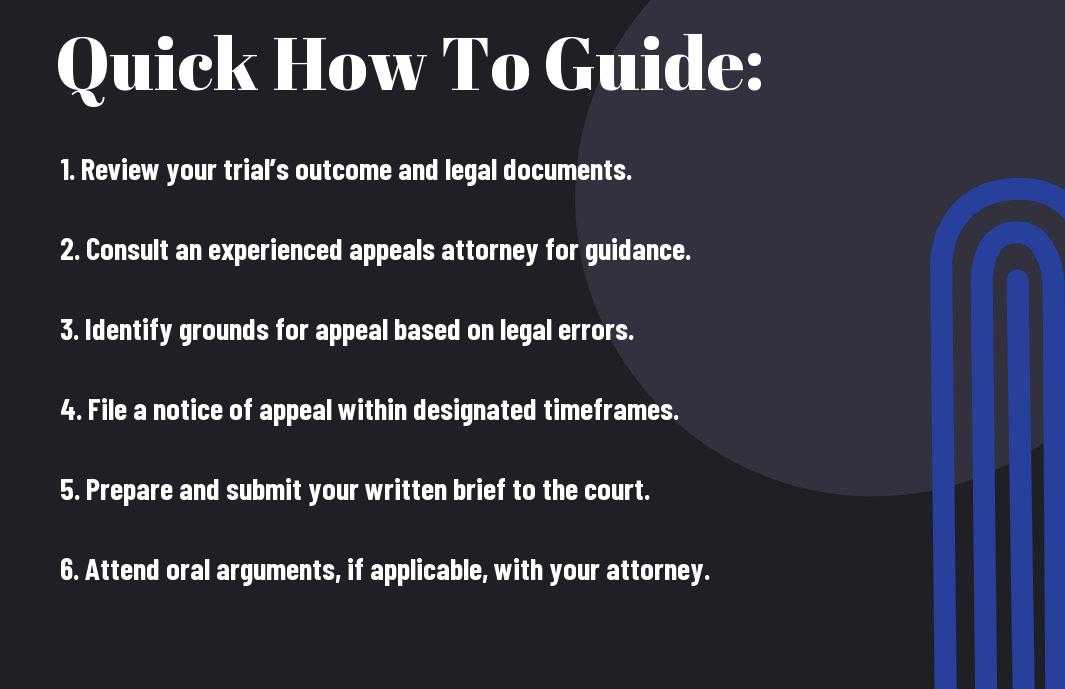
Upon reflecting, navigating the appeals process after a criminal conviction requires a strategic approach and thorough understanding of legal procedures. You should first consult with an experienced attorney who can guide you through your options and assess the strengths of your case. Gathering all relevant documentation and evidence from your trial is imperative to bolster your appeal. Staying organized and adhering to deadlines will significantly impact your chances of success. Ultimately, understanding the specific grounds for appeal is key to effectively challenging your conviction and seeking justice.