

Just because you have a criminal record doesn’t mean your future is set in stone. Understanding how these records impact various aspects of your life—like employment, housing, and relationships—is crucial. In this guide, you’ll learn about the potential consequences of having a criminal record and discover effective strategies for managing and overcoming these challenges. By taking the right steps, you can pave the way for a brighter future, no matter your past.
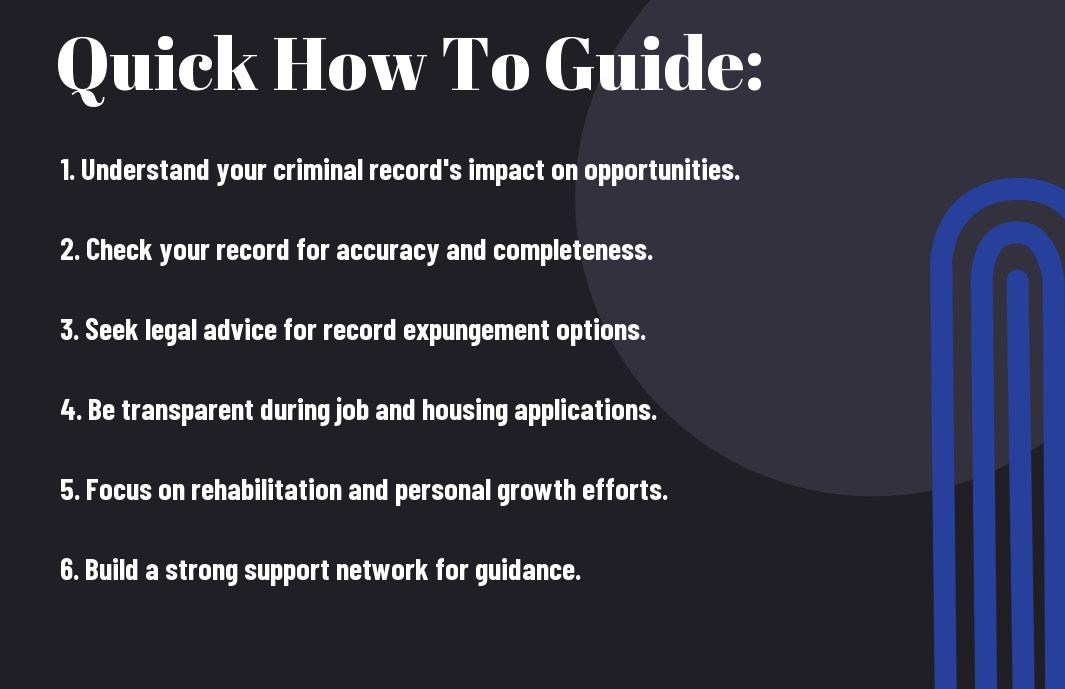

Understanding Criminal Records
Before delving into the far-reaching implications of criminal records, it’s vital to grasp what they are and how they come about. A criminal record can impact various aspects of your life, such as employment, housing, and social standing. Being informed about the nuances of these records can help you make more strategic choices in your future.
Definition and Types of Criminal Records
One of the primary aspects to consider is the various types of criminal records that exist. There are generally three categories:
| Type | Description |
| Arrest Records | Documents that detail arrests made by law enforcement. |
| Conviction Records | Records showing charges that resulted in a guilty verdict. |
| Sentencing Records | Information regarding the penalties imposed following a conviction. |
| Expungement Records | Records related to the sealing or removal of a criminal record. |
- Understanding the distinctions can guide your legal decisions.
- Each type has different implications for your future.
- They can affect job applications and background checks.
- Your rights and defenses may vary based on the record type.
- After learning about these types, you can better navigate your options.
Importance of Criminal Records
For many individuals, criminal records represent a significant barrier to achieving personal and professional goals. You may find that these records can hinder your job prospects, affect your ability to obtain loans or housing, and even influence your social relationships.
Understanding the significance of criminal records is vital for your future. They are not just mere documents; they often dictate the opportunities available to you. Employers frequently conduct background checks as a part of their hiring processes, meaning that a criminal record could be a deciding factor. Additionally, many professional licenses require a clean record, which can limit your career options. Thus, being proactive about managing and potentially expunging your criminal records can significantly alter the course of your life.
How Criminal Records Affect Employment Opportunities
Some employers may view criminal records as a red flag, impacting your chances of securing a job. Many companies conduct background checks to assess your history, which can lead to unfavorable perceptions about your reliability and trustworthiness. Even minor offenses can create obstacles in your employment journey.
Factors Employers Consider
One significant aspect employers evaluate is the nature of your offense in relation to the job position. They may also consider factors such as:
- The time elapsed since the offense
- Your level of rehabilitation
- The severity of the crime
- Your overall work experience and qualifications
Perceiving you through the lens of your criminal record can hinder your opportunities, despite your potential to excel in the position.
Impact on Job Applications
Affecting your job applications, having a criminal record can lead to automatic disqualifications in certain fields, particularly those involving vulnerable populations or sensitive information. Employers often inquire about criminal history, and how you present this information can vary in importance depending on industry rules and company policies.
As you complete job applications, addressing your criminal record can be daunting, but honesty is vital. Many employers appreciate transparency, and when positioned correctly, you can showcase your growth and the lessons learned. Additionally, focusing on your skills and strengths can help reinforce your potential as a candidate. Emphasizing your commitment to personal development and readiness to move forward can leave a more positive impression.
Tips for Managing Criminal Records
After facing the reality of a criminal record, it’s important to take proactive steps in managing it effectively. Consider the following tips:
- Stay informed about your rights concerning your criminal record.
- Utilize background check services to know what potential employers see.
- Be honest when discussing your record during job applications.
- Seek legal advice for options related to expungement or sealing records.
Any steps you take can help mitigate the impact of your criminal history on your future.
Steps to Obtain Your Criminal Record
There’s a straightforward process to obtain your criminal record. Start by identifying the agency responsible for maintaining these records in your state, which is often the police department or state bureau of investigation. You may need to fill out a request form and provide identification. In some cases, there may be a nominal fee for processing your request. Online portals may also be available, making the process more convenient.
Options for Record Expungement
Expungement can provide a fresh start by removing certain criminal records from public access. Depending on the jurisdiction and the nature of the offense, not all records are eligible for expungement. Criteria often include the amount of time since the offense, whether you completed your sentence, and if you have any subsequent convictions. It is vital to explore the specific laws applicable in your area to determine if you qualify for this option.
Records that are eligible for expungement can be petitioned to be sealed or destroyed, providing relief from the ongoing stigma. You might need to gather supporting documents and possibly attend a hearing. Consulting with a legal professional can help clarify the process and timescales involved, ensuring you understand the implications and benefits of expungement for your circumstances.
How to Explain a Criminal Record to Employers
For many job seekers, explaining a criminal record can feel daunting. However, being transparent about your history can help build trust with potential employers. It’s imperative to approach the conversation with honesty while focusing on your skills, experiences, and the positives that you bring to the table. By emphasizing your personal growth and the steps you’ve taken to move forward, you can demonstrate resilience and commitment to professionalism.
Preparing for Interviews
Little preparation goes a long way when deciding how to discuss your criminal record in interviews. Take time to anticipate questions and practice your responses. This will help you feel more confident and enable you to present your history calmly and clearly.
Crafting Your Narrative
Record your thoughts and experiences about your past, as this helps you articulate your story effectively. Approach your narrative by focusing on what you have learned and how you have changed since your past decision-making. It is vital to turn your story into a lesson of growth, emphasizing the positive transformation you’ve undergone and how it contributes to your suitability for the job.
Interviews are an excellent opportunity to showcase your commitment and resilience. Tailor your narrative to highlight your skills and qualifications while briefly addressing your criminal record. Acknowledge it concisely, then steer the conversation toward how you have overcome challenges. By framing your past experiences in a way that reflects personal growth and dedication, you can make a lasting impression on potential employers.
Resources for Assistance
To navigate the challenges posed by your criminal record, it is imperative to tap into available resources for assistance. Numerous organizations can provide support, guidance, and legal advice to help you understand your rights and options moving forward. Seeking out these resources can empower you to reclaim control over your life and pursue opportunities that may seem out of reach due to your past.
Legal Aid Options
With many individuals facing financial barriers, various legal aid organizations offer affordable or free assistance to help you address issues related to your criminal record. These services can assist with expungement processes, legal representation, and information about your rights. By accessing these resources, you can better navigate the legal landscape and work towards minimizing the impact of your record on your future.
Support Groups and Rehabilitation Services
While the journey toward rebuilding your life can be daunting, support groups and rehabilitation services play a vital role in providing the encouragement and assistance you need. Connecting with others who share similar experiences helps you feel less isolated and allows for the exchange of valuable coping strategies and resources.
Groups focused on recovery and reintegration often provide a safe space for you to share your experiences and emotions. Many offer workshops, counseling, and life skills training to help you develop imperative tools for personal growth. Participating in these services fosters a sense of community and accountability, which can significantly contribute to your successful reintegration into society.
Future Implications of Criminal Records
Keep in mind that having a criminal record can significantly influence various aspects of your life, potentially limiting your opportunities and affecting your ability to achieve certain goals. Understanding these implications will allow you to navigate your future with greater awareness and preparation.
Potential Restrictions on Housing and Finances
Now, landlords and financial institutions often conduct background checks, and a criminal record can lead to difficulties securing housing or obtaining loans. This can narrow your options and may require you to seek alternative arrangements, impacting your stability and financial planning.
Long-term Effects on Personal Life
Restrictions on your personal life can emerge as a result of your criminal record, influencing your relationships, social connections, and self-esteem. The stigma associated with a criminal history may lead to feelings of isolation or judgment from peers and loved ones, making it challenging to build or maintain supportive relationships.
Criminal records can haunt you long after the initial incident, shaping your personal identity and sense of self-worth. You may experience barriers in forming intimate relationships or facing societal judgment, which can lead to mental health challenges. It is vital to find constructive ways to cope, such as seeking support from friends, therapy, or community groups focused on rehabilitation and growth.
To wrap up
As a reminder, understanding how your criminal record can impact your future is vital for navigating employment, housing, and social relationships. By actively managing your record through expungement or seeking legal guidance, you can mitigate negative effects and present a more favorable image to potential employers and peers. Take proactive steps to educate yourself about your rights and options, so you can move forward confidently and effectively shape your future.