

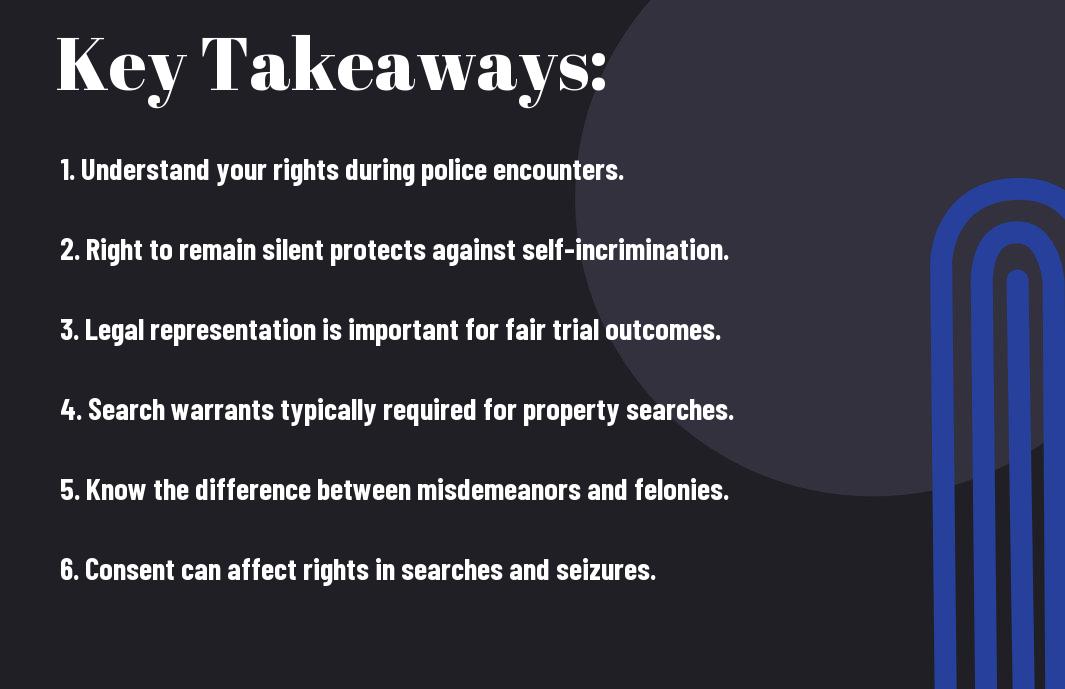
Rights granted to you under criminal law are necessary for protecting your freedom and ensuring fair treatment within the legal system. Understanding these rights, from your right to remain silent to your right to legal representation, empowers you to navigate any legal challenges you may face. This informative guide will provide you with the necessary knowledge you need to safeguard your interests and ensure your voice is heard in the complexities of criminal law.
Understanding Criminal Law
Your understanding of criminal law is important for navigating the legal system. This area of law governs offenses against the state or the public, establishing the rules and regulations to maintain social order. Knowing your rights and responsibilities within this framework helps you to effectively engage with legal proceedings when necessary.
Definition and Scope
Among the key components of criminal law are definitions of offenses, the legal process, and potential penalties. This area applies to various actions considered harmful to society, from theft to violent crimes, outlining the legal ramifications individuals face when committing such acts.
Types of Crimes
You should be aware that crimes are generally categorized into two main types: felonies and misdemeanors. Each classification carries different consequences and levels of severity. Understanding these distinctions helps you recognize the potential legal obligations and penalties you may encounter.
- Felonies: Serious offenses punishable by imprisonment, often exceeding one year.
- Misdemeanors: Less severe crimes typically resulting in fines or shorter jail sentences.
- Infractions: Minor violations typically resulting in fines, such as traffic offenses.
- White-collar crimes: Non-violent offenses related to business or financial misconduct.
- Blue-collar crimes: Offenses often associated with physical harm, property damage, or theft.
Recognizing these categories can enhance your understanding of how criminal law operates.
| Type of Crime | Description |
| Felonies | Serious offenses such as murder or sexual assault. |
| Misdemeanors | Less serious offenses like petty theft or vandalism. |
| Infractions | Minor violations such as parking tickets. |
| White-collar Crimes | Crimes committed for financial gain without physical violence. |
| Blue-collar Crimes | Crimes characterized by physical harm or property damage. |
Crimes can further be detailed into several categories based on their nature and impact on society. Understanding these distinctions equips you with valuable insights during legal encounters. The classifications could include:
- Property crimes: Involving the theft or destruction of someone else’s property.
- Violent crimes: Crimes that inflict harm or threaten harm against individuals.
- Cybercrime: Offenses committed via digital platforms.
- Drug crimes: Offenses related to controlled substances.
- Traffic offenses: Violations of vehicle operation regulations.
Recognizing these categories aids in grasping the complex nature of criminal law.
| Type of Crime | Description |
| Property Crimes | Theft, burglary, and vandalism. |
| Violent Crimes | Assault, murder, and domestic violence. |
| Cybercrime | Hacking, online fraud, and identity theft. |
| Drug Crimes | Possession and trafficking of illegal substances. |
| Traffic Offenses | Driving under the influence and reckless driving. |
Your Rights When Accused
Some individuals may not fully understand their rights when facing accusations. It is vital to be aware of your rights to effectively navigate the legal system and protect yourself during this challenging time. Whether you are being questioned by law enforcement or facing formal charges, understanding your rights can significantly affect the outcome of your situation.
Right to Remain Silent
Before responding to any inquiries by law enforcement, you have the right to remain silent. This means you can choose not to answer questions or make statements that could be used against you in court. Exercising this right can prevent misunderstandings or self-incrimination. Always communicate your intention to remain silent clearly and calmly.
Right to an Attorney
Behind your right to remain silent is the equally important right to have an attorney present during interrogations. You should never feel pressured to proceed without legal representation, as an attorney can help protect your interests and navigate the complexities of the law.
Silent assistance from an attorney can be invaluable. They have the expertise to advise you on your rights and options, ensuring that you do not unintentionally compromise your defense. Your attorney can communicate with law enforcement on your behalf and represent you during court proceedings, making it vital to seek legal counsel as soon as you are accused of a crime.
Legal Processes in Criminal Cases
All individuals should be aware of the legal processes that unfold during criminal cases. Understanding how these processes work can empower you and help you navigate the complexities of the justice system. From initial arrests to potential court outcomes, knowing your rights throughout these stages is necessary for effective self-advocacy and informed decision-making.
Arrest and Charges
At the moment you are arrested, law enforcement must inform you of the charges against you and your rights. You have the right to remain silent and to seek legal counsel immediately. Understanding the nature of the charges can impact your next steps, so it’s vital to gather as much information as possible during this time.
Court Proceedings
Below is an overview of the court proceedings you may face if charges are brought against you. The process typically includes arraignment, pre-trial motions, trial, and sentencing, should you be found guilty. Each stage comes with its own rules and circumstances that you should be prepared for.
This phase of the legal process starts with your arraignment, where you will enter a plea. Pre-trial steps can involve plea bargaining, where you may have the chance to negotiate a lesser sentence. If your case goes to trial, both sides will present evidence before a judge or jury, who will ultimately decide your fate. If convicted, the sentencing will determine the consequences, ranging from fines to imprisonment, highlighting the importance of having knowledgeable legal representation throughout the proceedings.

Defenses in Criminal Law
Now, understanding the various defenses available in criminal law is vital for navigating your legal situation. These defenses can significantly influence the outcome of your case, allowing you to challenge the prosecution’s claims or mitigate the charges against you. By being aware of the types of defenses that exist, you can better prepare yourself if you ever find yourself facing criminal charges.
Common Legal Defenses
At the core of criminal law, common legal defenses include self-defense, insanity, mistake of fact, and alibi. Each of these defenses serves to demonstrate that your actions or state of mind were justified or not criminal in nature. To effectively utilize these defenses, you need to understand how they apply to your specific case, providing you with an opportunity to assert your rights in court.
Importance of Legal Representation
Above all, having competent legal representation is vital in a criminal case. A skilled attorney can help you navigate complex legal processes, identify the best defense strategies, and advocate on your behalf in court. Without professional assistance, you risk overlooking critical aspects of your case and weakening your position against the prosecution.
Plus, your attorney will possess the knowledge and experience to challenge evidence and procedures that may violate your rights. This expertise will not only enhance your chances of securing a favorable outcome but also provide you with peace of mind throughout the legal process. Investing in legal representation is a proactive step you can take to protect your rights and your future.
Impact of Criminal Convictions
Unlike what some may believe, having a criminal conviction can significantly alter your life. The implications of a criminal record extend beyond penalties and serve as barriers in securing employment, housing, and educational opportunities. These consequences can have a lasting effect on your personal and professional relationships, often leading to stigma and isolation. Understanding these impacts is vital for anyone facing criminal charges and for those who have already been convicted.
Consequences of a Criminal Record
Record of a criminal conviction can lead to various negative consequences in your life. It may hinder your ability to obtain jobs, as many employers conduct background checks. Additionally, a criminal record can affect your eligibility for professional licenses and limit your housing options. Even after serving your sentence, the repercussions may linger, impacting your social interactions and overall quality of life.
Rights Restoration
Around the world, legal systems recognize the importance of restoring rights after serving a criminal sentence. You may have the option to have your rights reinstated, which can help you reintegrate into society. This process varies by jurisdiction, but it often includes the removal of some legal disabilities associated with your conviction.
The process of restoring your rights generally involves submitting applications or petitions to the appropriate authorities. You may need to demonstrate that you have fulfilled the terms of your sentence, such as completing probation or parole. Some states also offer expungement options, which can erase or seal your criminal record under certain conditions. Engaging a legal professional can assist you in navigating these processes and understanding your specific rights in your area.
Seeking Legal Help
After experiencing any legal issues, it’s vital to seek professional advice as soon as possible. A skilled attorney can effectively guide you through the complexities of criminal law and advocate for your rights. Don’t hesitate to reach out for help, as timely legal support can significantly impact your situation.
Finding the Right Attorney
At the outset, identify attorneys who specialize in criminal law and have a proven track record in handling cases similar to yours. Schedule initial consultations to discuss your case, evaluate their approach, and ensure you feel comfortable with their style. A good attorney will listen to your needs and work diligently to protect your interests.
Legal Aid Resources
Any individual facing legal challenges should explore available legal aid resources, especially if financial constraints are a concern. Various organizations provide support to those in need of representation and advice in criminal matters.
In addition to local legal aid offices, you can find numerous non-profit organizations that focus on providing legal assistance to low-income individuals. They often offer free or sliding-scale services to ensure that everyone has access to legal representation. Check your state or local bar association’s website for referrals and resources tailored to your specific situation. Utilizing these services can help you navigate the legal system more effectively while safeguarding your rights.
To wrap up
The landscape of criminal law can be complex, but understanding your rights is imperative for navigating it effectively. You have specific protections and entitlements that can significantly impact the outcome of any legal situation you may encounter. By familiarizing yourself with these rights, you empower yourself to make informed decisions, whether you are facing accusations or merely seeking to understand the legal system around you. Staying informed ensures that you can advocate for yourself and seek the fair treatment you deserve under the law.