

With the complexities of the criminal justice system, you may find yourself contemplating the implications of plea deals on your sentencing options. Understanding how these agreements can influence the outcome of your case is necessary for making informed decisions about your future. This blog post will explore how plea deals can shape your sentencing and the alternatives available to you. By gaining clarity on this subject, you empower yourself to navigate the legal landscape effectively.
Understanding Plea Deals
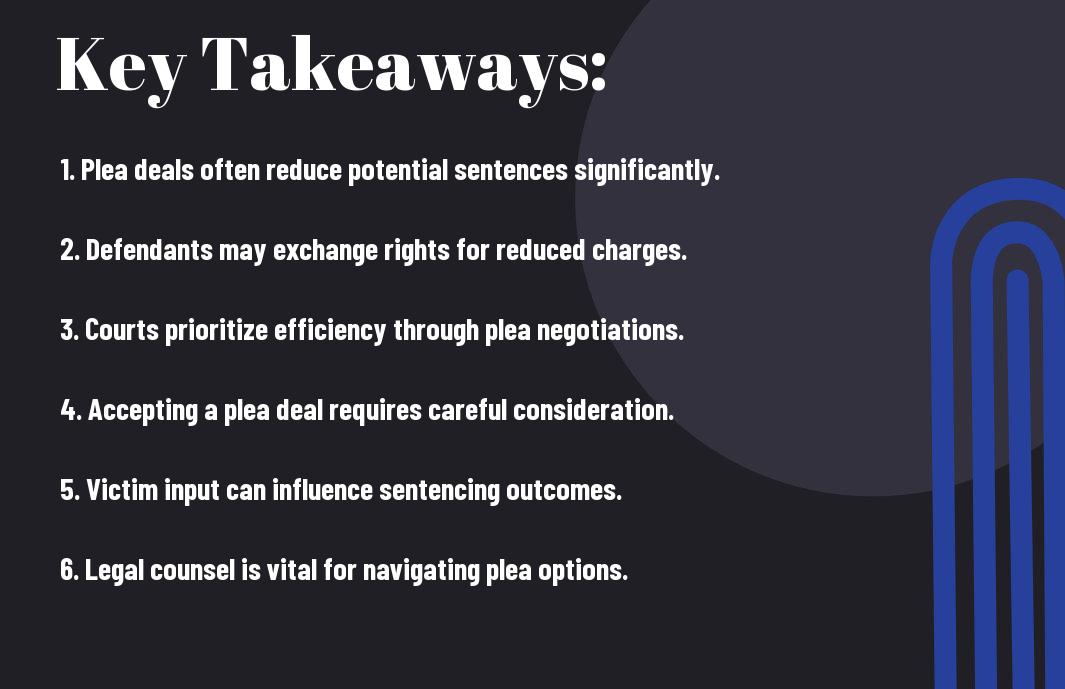
To navigate the complexities of the criminal justice system, understanding plea deals is crucial. A plea deal is an agreement between the defendant and the prosecution where the defendant agrees to plead guilty to a lesser charge or receive a lighter sentence in exchange for waiving their right to a trial. This process can significantly affect the outcome of your case, particularly in terms of sentencing and future legal options available to you.
Definition and Purpose
Around the courtroom, plea deals serve as a practical solution to reduce court caseloads and expedite the legal process. They allow defendants to secure more favorable outcomes by taking responsibility for lesser offenses, often resulting in reduced penalties or sentences. This negotiation can save both time and resources for everyone involved.
Types of Plea Agreements
Behind every plea agreement are specific types that serve different strategic purposes. Here are the main types of plea deals you might encounter:
- Charge Bargaining
- Sentence Bargaining
- Fact Bargaining
- Downward Departures
- Cooperation Agreements
After considering your situation and the details of the agreement, it is crucial to understand how each plea type can influence your case outcome.
| Plea Type | Description |
|---|---|
| Charge Bargaining | Negotiating for a lesser charge |
| Sentence Bargaining | Seeking a lighter sentence for a guilty plea |
| Fact Bargaining | Agreeing on facts to support lower penalties |
| Downward Departures | Requesting leniency based on mitigating factors |
| Cooperation Agreements | Offering assistance in other cases for a favor |
In fact, understanding the types of plea agreements is vital to making an informed decision. They can vary in their implications and potential impact on your future, particularly if you’re considering taking a plea deal. Knowing which type may be more beneficial can change the trajectory of your case.
- Charge Bargaining
- Sentence Bargaining
- Fact Bargaining
- Downward Departures
- Cooperation Agreements
After evaluating your options based on the types of agreements available, you can better strategize your approach in discussions with your legal counsel.
| Plea Agreement | Considerations |
|---|---|
| Charge Bargaining | Evaluate the extent of reduced charges |
| Sentence Bargaining | Consider potential leniency durations |
| Fact Bargaining | Understand the accuracy of stated facts |
| Downward Departures | Assess mitigating factors in your favor |
| Cooperation Agreements | Gauge the weight of your cooperation |

The Role of Plea Deals in Criminal Sentencing
There’s a significant impact that plea deals have on criminal sentencing, shaping how cases are resolved and what penalties you may face. By negotiating with prosecutors, defendants can often reduce their charges or receive lighter sentences in exchange for a guilty plea. This process not only streamlines the judicial system but also provides you with an opportunity to avoid the uncertainties of trial outcomes.
How Plea Deals Influence Sentencing Outcomes
Between the choice to accept a plea deal and go to trial, the former often leads to more favorable sentencing outcomes. By pleading guilty, you may benefit from a negotiated sentence that reflects a lesser charge or reduced penalties. This strategic decision significantly alters the course of your legal consequences and can preserve your future opportunities.
Sentencing Discrepancies and Fairness
On the other hand, plea deals can also lead to discrepancies in sentencing that raise questions about fairness in the justice system. When some defendants receive lighter sentences for similar offenses, it can create an impression of unequal treatment, affecting public trust in judicial outcomes.
Plea deals can result in sentencing discrepancies, as not all defendants have the same negotiating power or resources. Factors such as the quality of your legal representation and the specific circumstances of your case can lead to differing outcomes, even among individuals charged with similar crimes. This can create an environment where justice feels inconsistent, leaving you to wonder if your sentence is truly reflective of the crime committed. Addressing these disparities is vital to fostering a fair legal system that respects the rights of every individual.
Legal Implications of Accepting a Plea Deal
Not fully understanding the legal implications of accepting a plea deal can significantly impact your case. By agreeing to a plea, you may concede rights, including the right to a trial, which could lead to unintended consequences. It’s crucial to weigh the benefits and drawbacks carefully, as a plea deal may lead to a more lenient sentence, but it also means admitting guilt, which could affect your future opportunities, such as employment or housing.
Rights and Waivers
Around the time you consider a plea deal, it is crucial to recognize that you will likely need to waive certain legal rights. This may include your right to a jury trial and the right to confront witnesses against you. Understanding what you are giving up is vital before proceeding with any agreement.
Consequences of a Guilty Plea
About the outcomes of a guilty plea, accepting a plea deal means you are admitting guilt, which can have lasting repercussions. This acknowledgment may lead to a criminal record, impacting various aspects of your life, including job prospects and housing applications. Moreover, a guilty plea often affects your right to appeal the sentence, which limits your options for seeking further justice.
Even though a guilty plea may offer a quicker resolution and possibly a reduced sentence, the long-term effects can be serious and far-reaching. It is crucial to consider how this admission of guilt might influence your life post-sentencing, as it often results in difficulties in securing employment, housing, or even obtaining professional licenses. As you weigh your options, think critically about how accepting a plea deal may shape your future in profound ways.
Factors to Consider Before Accepting a Plea Deal
For anyone navigating the complexities of a legal situation, evaluating a plea deal involves several important factors. You should consider the following:
- The strength of the evidence against you
- The potential sentence if convicted at trial
- Your current legal strategy and options
- The implications for your future, including employment
Knowing these factors will help you make an informed decision about your case.
Evaluating Evidence and Case Strength
Before accepting a plea deal, it’s imperative to assess the evidence against you and the overall strength of your case. Determine whether the prosecution has compelling evidence that could lead to a conviction. Weigh your chances at trial, as a weak case could push you toward considering a plea deal, while strong evidence may encourage you to fight the charges.
Consulting with Legal Counsel
Behind every sound decision about a plea deal is the guidance of experienced legal counsel. Consulting with a qualified attorney ensures that you fully understand your options and the potential consequences of accepting a deal. They can provide insights into the strengths and weaknesses of your case and help you navigate the legal landscape more effectively.
It is imperative to leverage the expertise of your attorney when evaluating a plea deal. Your lawyer can clarify the risks and benefits associated with accepting the offer, ensuring you comprehend the ramifications on your life, career, and future legal standing. Their advice will be instrumental in helping you make a well-informed choice that aligns with your best interests.
Alternatives to Plea Deals
Despite the prevalence of plea deals in the criminal justice system, there are several alternatives you may consider. You can explore options such as going to trial, which allows you to present your case before a judge and jury, or consider alternative sentencing options that may be available depending on the circumstances of your case and the laws in your jurisdiction.
Going to Trial
For some individuals, going to trial may be a preferable option to accepting a plea deal. By taking your case to court, you can challenge the evidence presented against you, present your own witnesses and arguments, and potentially receive a more favorable outcome if the jury finds you not guilty.
Other Sentencing Options
Among the alternatives to a plea deal are various sentencing options that may include probation, community service, or restorative justice programs. These options often focus on rehabilitation rather than punishment, offering you the chance to address any underlying issues and make amends related to your offense.
Indeed, exploring other sentencing options can be beneficial, as these alternatives may provide you with a path to reduce the impact of a criminal conviction on your life. Depending on your offense and personal circumstances, you might have access to specialized programs that emphasize personal growth, accountability, and the opportunity to reintegrate into society without a lengthy jail sentence. You should discuss these possibilities with your attorney to determine the best course of action for your situation.
The Future of Plea Bargaining in the Legal System
All indications suggest that plea bargaining will continue to play a dominant role in the legal system. As courts seek to manage caseloads efficiently, you can expect to see the evolution of plea deals to accommodate new legal standards and societal expectations. The balance between justice and efficiency will shape how these negotiations unfold in the coming years.
Trends and Reforms
Before you consider the future landscape of plea bargaining, it’s important to understand the current trends and potential reforms. Many jurisdictions are exploring changes to ensure transparency and fairness in the plea process. For you, this means that there could be improved safeguards implemented in plea negotiations, impacting your options during criminal proceedings.
Impact of Public Perception
Between public opinion and legal practices, perception significantly influences plea bargaining. You may find that societal attitudes towards crime and punishment have a direct effect on how plea deals are viewed and utilized within the justice system. As public pressure mounts for reforms, the nature of plea bargaining may transform in response to these shifting views.
Due to growing awareness of the potential disparities and injustices in plea bargaining, public perception often shapes policies that govern these practices. Many individuals, including policymakers and advocates, are increasingly vocal about their concerns regarding fairness and transparency in plea deals. This collective sentiment may lead to significant shifts, encouraging a more balanced approach that ensures your rights are protected while navigating the complexities of the legal system.
Conclusion
With these considerations, it’s imperative to understand how plea deals can significantly affect your criminal sentencing and your available options. Engaging in a plea bargain may lead to a more predictable outcome and potentially lighter penalties, but it’s vital to weigh this against the implications for your case. Always consult with a legal professional to ensure you are making informed decisions that align with your best interests and long-term goals. Your path through the justice system can be influenced heavily by the choices you make regarding plea deals.