

It’s important to understand the distinctions between probation and parole, as well as your legal rights related to both. This blog post will provide you with a clear overview of how these two forms of supervision differ, what you can expect during each, and the rights you have while navigating these processes. By arming yourself with this knowledge, you can better advocate for your interests and ensure that you understand the implications of being under supervision.
Understanding Probation
As you navigate the criminal justice system, understanding probation is crucial. Probation is an alternative to incarceration that allows you to remain in the community under supervision, provided you adhere to specific conditions. This option gives you the opportunity to rehabilitate while still being accountable for your actions, ultimately aiming for reintegration into society without further criminal activity.
Definition and Purpose
Against a backdrop of criminal punishment, probation serves as a rehabilitative measure designed to prevent recidivism while allowing you to maintain ties with your community and family. It seeks to balance accountability and support, enabling you to learn from your mistakes and reintegrate successfully into society.
Conditions and Duration
Between your probation terms, you may need to fulfill several conditions that could include regular meetings with a probation officer, attending counseling sessions, or refraining from drug use. The duration of probation varies based on the offense but typically ranges from one to three years.
Also, it’s important to note that failing to comply with the conditions of your probation can lead to serious consequences, including revocation and possible incarceration. You should be fully aware of what is expected during your probation period to avoid any violations. Maintaining communication with your probation officer and adhering to all requirements will significantly increase your chances of a successful probation experience.
Understanding Parole
Assuming you are navigating the complexities of the criminal justice system, understanding parole is crucial. Parole is a conditional release from prison that allows you to serve the remainder of your sentence in the community, while still under supervision. It is intended to help reintegrate you into society, promoting rehabilitation while ensuring public safety.
Definition and Purpose
About parole, it represents a transitional phase in your journey towards complete freedom following incarceration. Designed to balance your reintegration into society with public safety, parole allows you to demonstrate your commitment to a law-abiding lifestyle in a structured environment.
Conditions and Duration
Before being granted parole, you will need to comply with various conditions that govern your behavior during the parole period, which can vary in duration depending on the nature of your conviction. Typical conditions may include regular check-ins with a parole officer, maintaining employment, and refraining from drug or alcohol use.
Understanding the conditions and duration of your parole is vital. Parole typically lasts for a set period, often several months to a few years. During this time, you must adhere to specific stipulations that may include curfews, attending counseling sessions, and completing community service. Non-compliance with these conditions can result in serious consequences, including potential incarceration. Being aware of these requirements will help you successfully navigate your parole and maintain your progress toward a stable and law-abiding life.
Key Differences Between Probation and Parole
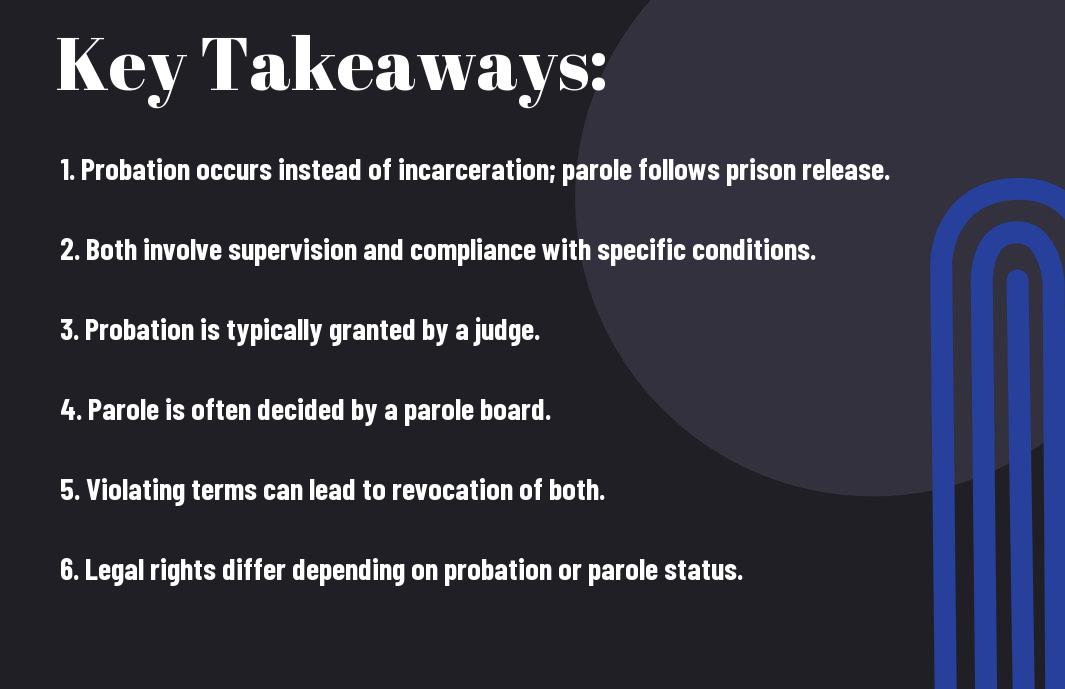
To grasp the distinctions between probation and parole, it’s crucial to understand that probation is typically an alternative to incarceration, allowing you to serve your sentence in the community under specific conditions. Conversely, parole is granted after you have served a portion of your prison sentence, allowing for a supervised transition back into society. Both options aim to rehabilitate individuals but operate at different stages of the criminal justice process.
Legal Status
Before entering probation, you may have been sentenced by a judge, while parole occurs after a portion of your prison time has been completed, often contingent on good behavior. Your legal status during probation usually means you avoid prison altogether, whereas on parole, you continue to serve your sentence under supervision after being incarcerated.
Supervision and Reporting
Above all, supervision differences play a vital role in the experiences of individuals on probation versus those on parole. While both require compliance with certain conditions, the reporting frequencies can vary significantly. Probation typically involves regular meetings with a probation officer, often more structured to ensure adherence to court-ordered conditions, whereas parole oversees your reintegration into society with less frequent check-ins.
In fact, the frequency and nature of your supervision can greatly influence your reintegration experience. On probation, you might encounter more intense oversight, which could include mandatory therapy sessions, work requirements, or community service. In contrast, parole may allow for greater autonomy, focusing on your ability to manage your reintegration while still expecting compliance with basic conditions. Understanding how these differences impact your daily life and responsibilities can help you navigate your journey more effectively.
Legal Rights of Individuals on Probation
Despite being under supervision, you hold specific legal rights that protect you during your probation period. Understanding these rights is imperative to ensuring you are treated fairly and that you comply with the terms of your probation while still retaining your dignity and agency. It is vital to know what protections are afforded to you by law as you navigate this challenging phase of your life.
Rights to Fair Treatment
The law guarantees you the right to fair treatment while on probation, which means you should not face discrimination or be subjected to unreasonable restrictions beyond what your probation terms dictate. You deserve to be treated with respect and have your rights upheld by your probation officer and the legal system.
Rights to Due Process
One of your fundamental rights while on probation is the right to due process, which requires that you receive fair procedures before any penalties or actions are taken against you. This includes being informed of the reasons for any allegations, having the chance to respond, and the opportunity for a hearing if necessary.
Rights to due process ensure that you are not unfairly penalized or subjected to arbitrary decisions regarding your probation. If you face a violation or any other issue, you have the right to contest the allegations and present evidence in your defense. It is important to be aware of this right, as it empowers you to advocate for yourself and seek a fair resolution to any disputes that may arise during your probationary period.
Legal Rights of Individuals on Parole
Your rights during parole include several legal protections designed to support your reintegration into society. These rights can vary by jurisdiction but generally ensure that you have access to vital resources and maintain certain freedoms. Understanding these rights is vital for navigating your parole experience successfully, empowering you to advocate for yourself and seek assistance when needed.
Rights to Rehabilitation
Legal frameworks often guarantee your right to rehabilitation, meaning you have access to programs that help you reintegrate successfully into society. These may include job training, counseling, and educational opportunities, designed to support your development and reduce recidivism.
Rights to Appeal
Rights to appeal allow you the opportunity to contest decisions made during your parole process, such as a denial of parole or conditions imposed upon you. These rights ensure that if you believe there has been an error or unfair treatment, you can seek a review and potentially remedy the situation.
But your right to appeal typically comes with specific procedures and timelines that must be followed to be effective. Always ensure that you are aware of the rules governing appeals in your jurisdiction, including where to file and the necessary documentation. Engaging with a legal professional who specializes in parole issues may further enhance your chances of a successful appeal, should you feel your rights have been violated.
Challenges Faced by Individuals on Probation and Parole
Not everyone understands the complexities of life on probation or parole. You may encounter various challenges that can hinder your reintegration into society. These may include navigating the demands of your probation or parole officer, maintaining employment, and complying with specific conditions set by the court. Each of these hurdles can feel overwhelming at times, impacting your mental well-being and personal relationships.
Stigmatization
Challenges often arise from societal stigmatization. You may find that negative perceptions surrounding individuals on probation or parole lead to feelings of isolation and rejection. This stigma can affect your ability to form new relationships, secure housing, or gain employment, ultimately making your transition to a normal life more difficult.
Compliance Issues
Parole requirements can become complex and, at times, burdensome. You are expected to adhere to various rules, such as meeting regularly with your parole officer or submitting to drug tests, which can add pressure to your everyday life. Failure to comply, even unintentionally, can lead to severe consequences, including revocation of your parole. This constant vigilance to meet requirements may create stress, affecting your mental health and your ability to successfully reintegrate into society.
Further complicating compliance issues is the reality of changing conditions that you must adapt to. Unexpected life events, such as job loss or family emergencies, may interfere with your ability to meet set obligations. Additionally, lack of access to resources, like transportation or financial assistance, can further hinder your compliance with the terms of your probation or parole. It’s important to stay proactive by addressing these potential roadblocks and seeking help when needed to navigate these challenges effectively.
To wrap up
Summing up, understanding the distinctions between probation and parole is necessary for navigating the criminal justice system. You need to be aware of your legal rights and responsibilities whether you are facing probation or are on parole. By familiarizing yourself with these terms, you empower yourself to make informed decisions and advocate for your best interests during your rehabilitation journey.