

Protection of yourself and your loved ones is a fundamental right, but understanding when and how you can legally defend that right is vital. Self-defense laws vary significantly from state to state, dictating what actions are considered justifiable in the face of a threat. In this post, you will learn the key principles of self-defense laws, including the circumstances that permit you to respond with force, the concept of reasonable belief, and the limitations that protect both you and others involved in a confrontation.
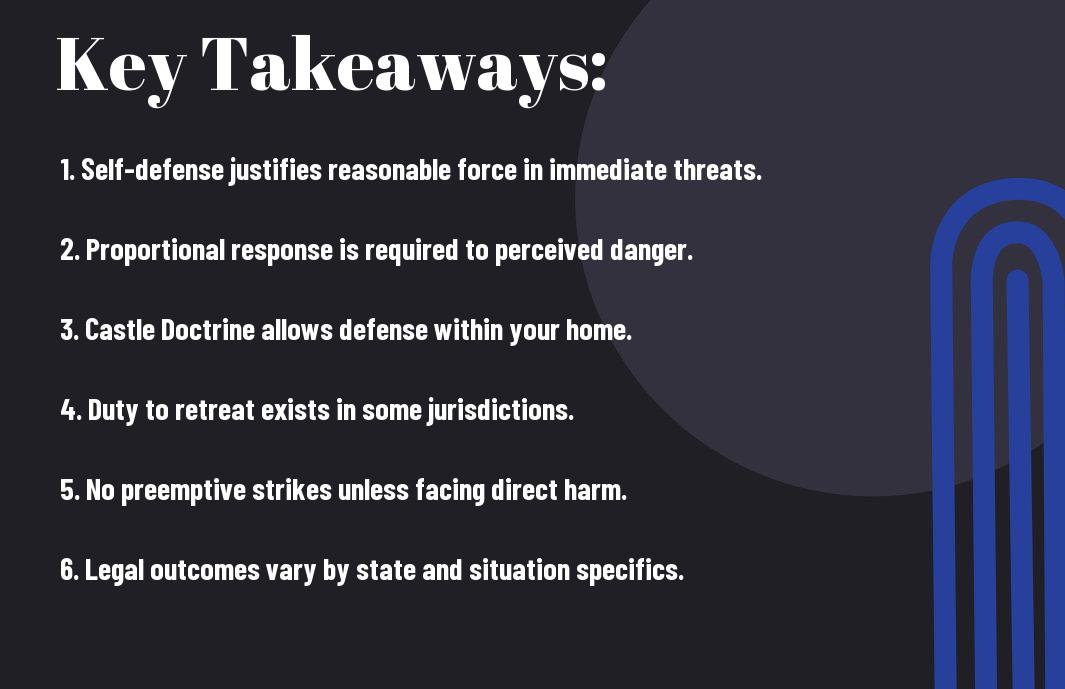

Understanding Self-Defense Laws
For anyone seeking to understand self-defense laws, it’s important to grasp the legal framework that governs when and how you can protect yourself. Laws vary significantly from one jurisdiction to another, and understanding these differences can help you navigate situations where self-defense may be necessary. This chapter will clarify the critical aspects of self-defense laws, providing you with the knowledge to act confidently in challenging circumstances.
Definition of Self-Defense
To define self-defense, it typically refers to the legal justification for using force to protect oneself from imminent harm. This concept implies that you can respond with appropriate force when faced with a threat, but the response must be proportionate to the situation. Understanding this definition is vital, as it sets the foundation for evaluating your actions in self-defense scenarios.
Importance of Knowing Your Rights
Along with understanding the definition, knowing your rights regarding self-defense is important for your protection and peace of mind. Being aware of what you can legally do in a threatening situation can empower you to act decisively without the fear of legal repercussions.
With a solid grasp of your rights, you can make informed decisions that align with the law, potentially avoiding unnecessary legal trouble. The repercussions of acting outside the bounds of self-defense laws can be severe, including criminal charges or civil liabilities. Knowledge of your rights equips you to handle confrontations more safely and effectively, ensuring you can protect yourself while remaining within legal parameters.
The Reasonable Person Standard
Now, it’s important to understand the reasonable person standard in self-defense laws. This standard evaluates how a typical person would perceive a threat in similar circumstances. Essentially, the law aims to determine whether your actions were justified based on what an ordinary person would consider reasonable when faced with the same situation. Understanding this standard helps you grasp when you can legally assert self-defense, keeping in mind that the context and your reactions will significantly influence the outcomes of your case.
Assessing Threat Perception
Above all, assessing your threat perception is vital in self-defense situations. You need to evaluate whether a reasonable person would see the situation as threatening. This subjective evaluation often hinges on the specific facts surrounding the encounter, like the behavior of the aggressor and any prior interactions. Your perceptions might differ from someone else’s, but what matters is how a reasonable person would interpret those actions in context.
The Role of Immediacy in Defense
Along with assessing threat perception, immediacy plays a significant role in determining whether your self-defense claim holds up in court. The law typically allows for self-defense only when an imminent threat is present, meaning you must act swiftly and decisively. If the threat has passed or you have a safe means to retreat, your justification for using force may weaken.
With immediacy being a central element in self-defense claims, you need to understand that the law requires a reaction to an ongoing threat. If you delay in responding or use force after the danger has passed, your right to self-defense may be compromised. Being able to establish that the threat was immediate and your response was aimed at protecting yourself right away can significantly impact the legal evaluation of your situation.
Proportionality in Self-Defense
Unlike popular belief, self-defense is not a free pass to use violence without limits. The legal principle of proportionality requires that your response to a threat be appropriate to the level of danger you face. This means that if someone pushes you lightly, responding with severe force could be deemed excessive. Understanding this balance is vital in determining whether your actions could be legally justified in a self-defense scenario.
Escalation of Force
Between confronting an aggressor and the use of physical force, there’s a spectrum of responses you can take. You should first assess the situation and attempt verbal communication or de-escalation techniques before resorting to force. If the threat intensifies, your reaction must remain reasonable; escalating your response in a way that exceeds what is necessary can lead to legal repercussions.
Effective Measures for Protection
An important aspect of your personal safety is knowing effective measures for protection in self-defense situations. These measures can range from self-defense training to employable safety devices like pepper spray or personal alarms. Investing in these tools not only enhances your ability to protect yourself but also promotes a proactive approach to safety.
Another beneficial approach is to familiarize yourself with self-defense classes or workshops. These programs can teach you practical techniques and strategies for managing potential threats. You can learn to identify warning signs of aggression, improve your situational awareness, and practice physical techniques that increase your confidence and capability in protecting yourself if necessary.
Duty to Retreat vs. Stand Your Ground
To understand the differences between duty to retreat and stand your ground laws, it’s important to recognize how each approach influences your ability to protect yourself in dangerous situations. Duty to retreat laws require you to attempt to escape a threatening scenario before resorting to force, while stand your ground laws permit you to use force without retreating, even if you could have safely exited the situation. The applicability of these laws can vary significantly by state, influencing how you respond to potential threats.
Overview of Duty to Retreat Laws
By understanding duty to retreat laws, you can better grasp the legal expectations in certain jurisdictions. This principle mandates that you make a reasonable effort to avoid confrontations or escape from a threatening situation before resorting to self-defense. Failure to adhere to this requirement could lead to legal consequences, impacting your right to defend yourself. Always check the specific laws in your state to fully understand your obligations.
Understanding Stand Your Ground Principles
To comprehend stand your ground principles, it’s critical to recognize that these laws empower you to defend yourself without needing to retreat when threatened. In states adopting this approach, you have the right to use reasonable force, including deadly force, if you believe your life is in danger or if you are facing serious bodily harm. This legal framework is designed to allow you the freedom to protect yourself in urgent situations.
Considering stand your ground principles, you should be aware that these laws vary by state and can significantly impact your legal standing during self-defense incidents. In situations where you feel threatened, the law allows you to stand your ground and use force, backing your right to defend yourself without the obligation to retreat first. However, understanding what constitutes a reasonable threat is important, as using force indiscriminately could lead to serious legal repercussions. Familiarize yourself with your local regulations to ensure you are well-informed and prepared in a potential confrontation.
Legal Consequences of Self-Defense
Keep in mind that while you may have the right to protect yourself, invoking self-defense can lead to complex legal repercussions. Each incident is unique, and laws vary significantly by jurisdiction. The consequences can range from peaceful resolution to potential criminal charges or civil lawsuits, so understanding the legal landscape is crucial for anyone considering self-defense.
Potential Criminal Charges
Charges related to self-defense can arise if the use of force is deemed excessive or unjustified. Law enforcement and prosecutors may evaluate the situation to determine if you acted within the parameters of self-defense. You risk facing assault or homicide charges if they deem your response disproportionate to the threat, making it vital to understand these boundaries.
Civil Liability and Lawsuits
Between the potential criminal charges, you may also face civil liability for your actions in self-defense. If the other party sustains injuries or damages during the encounter, they may decide to pursue a lawsuit against you, seeking compensation for medical bills, lost wages, or emotional distress. This highlights the importance of knowing not only when you can act in self-defense but also the ramifications of your actions.
Hence, being aware of the potential for civil liability is crucial. Even if you legally justify your actions, the other party may still seek legal recourse, leading to costly legal battles. It’s wise to consider obtaining insurance that covers legal expenses in self-defense cases and consult legal experts to help navigate the complexities of these situations.
Case Studies and Examples
All self-defense scenarios can present unique legal challenges. To better understand these complexities, consider the following case studies that illustrate the different outcomes based on specific circumstances:
- 1. McDonald v. State (Florida, 2012) – A homeowner who fatally shot an intruder was found justified under the “Stand Your Ground” law, resulting in no charges.
- 2. State v. McCoy (California, 2015) – A man who stabbed his attacker was convicted of manslaughter because the force used was deemed excessive.
- 3. R v. Martin (UK, 2001) – A householder who shot burglars was initially sentenced to prison, emphasizing the importance of proportionality in self-defense claims.
Notable Self-Defense Cases
Around the country, notable self-defense cases serve as benchmarks for understanding your rights. These cases highlight the judicial system’s interpretation of laws and the factors that influence outcomes, such as location and the perceived threat level during the incident.
Lessons Learned from Legal Precedents
About self-defense cases, legal precedents greatly influence your understanding of acceptable behavior during confrontations. The decisions made in previous cases can shape your legal strategy if you ever find yourself in a similar situation.
Another key insight from these precedents is the emphasis on proportionality and reasonable perception of threat. Courts assess whether your actions were appropriate based on the circumstances surrounding the conflict, including the nature of the threat and the response. This understanding can guide your approach to self-defense situations, ensuring you stay within legal boundaries while protecting yourself.
Summing up
Following this guide, you should now have a clearer understanding of self-defense laws and how they may apply to your situations. Knowing when you can legally protect yourself is imperative for ensuring your safety and making informed decisions. Each jurisdiction may have its own specific rules, so it’s important to familiarize yourself with the laws in your area. By understanding your rights and responsibilities, you can navigate self-defense scenarios with greater confidence while safeguarding yourself and others legally.